We don't just plan trips — we live them.
Tourism License: 2386/074
Dipak Sapkota
Need help? Give us a call.
Plan Your Trip
Book Now
Price from
US$820

Annapurna Circuit Trek

481 reviews
86 reviews
526 reviews

The Annapurna Circuit trek is a legendary route within the Himalayan mountain ranges of east-central Nepal. The total length of the trek varies between 68 km and 230 km, depending on the itinerary you follow. 

It is a multi-day hike, so you will cover this distance over several days of walking through lush valleys, rhododendron forests, traditional Nepali mountain villages, deep gorges, and alpine meadows. 

The Annapurna Circuit trek is famous for its incredible mountain vistas, breathtaking landscapes, unique Hindu & Buddhist culture, and adventure. Annapurna Circuit is a challenging trek, so it is better suited to trekkers with decent fitness. 

However, we also lead beginner trekkers with good fitness and proper preparation on the Annapurna Circuit. If you want to explore the beauty of the Annapurna region and witness jaw-dropping mountain vistas, the Annapurna Circuit trek is an incredible program.

Duration
11 Days
Trip Grade
Strenuous
Country
Nepal
Maximum Altitude
5,416 m/17,756 ft
Starts
Kathmandu
Ends
Kathmandu
Group Size
1-20
Activities
Trekking
Best Time
March to May and September to November

Highlights

  • One of the best long-distance treks in Nepal
  • An adventurous, once-in-a-lifetime trip that will push your limits
  • Ascend and descend through varying climatic zones, enjoying breathtaking landscapes
  • The trail goes through rhododendron and pine forests and ascends to alpine meadows
  • Enjoy stunning mountain vistas and gorgeous sunrises throughout the trail
  • Explore beautiful Nepali mountain villages such as Chame, Pisang, Manang, etc
  • Experience the incredible hospitality and unique culture & lifestyle of mountain communities
  • Go on a side hike to Ice Lake or Green Lake from Manang village
  • Spend nights at high altitude, such as Ledar and Thorong Phedi
  • Cross the daring Thorong La Pass, the highest mountain pass in Nepal
  • Get blessings at the ancient Braga monastery and the Muktinath Temple
  • Drive through the Kali Gandaki Gorge, the deepest gorge in the world
  • Have a lovely evening at Phewa Lake in Pokhara
  • Explore the bustling streets of Kathmandu, the city of temples

Annapurna Circuit trek introduction

Among Nepal's many high-altitude treks, the Annapurna Circuit is one of the best adventurous, challenging treks. On this trek, you will embark on the adventure of your lifetime and dare yourself to keep pushing ahead even when you are utterly challenged and tired.

As the Annapurna Circuit is one of the oldest trekking trails in Nepal, it is quite famous among adventure enthusiasts around the world. Like the Everest Base Camp trek, many dream of doing the Annapurna Circuit trek once in their life.

The Annapurna Circuit trek is adventurous, scenic, and has a well-established network of teahouses. The trail ascends and descends through diverse climatic zones, offering you breathtaking mountain vistas and unique mountain culture.

On this 11-day trek, you will travel within the Annapurna Conservation Area. The Annapurna Circuit connects the gorgeous valleys of Manang and Mustang via Thorong La Pass.

Thorong La Pass is the highest mountain pass in Nepal. Crossing it is the major highlight and most challenging part of the Annapurna Circuit trek in 11 days. It takes around 9 to 10 hours to cross the pass.

The top of the pass will reward you with a jaw-dropping sunrise and mountain panorama. Then you will descend to Muktinath Temple and drive through the Kali Gandaki Gorge, the deepest gorge in the world, to Pokhara.

Why choose the Annapurna Circuit trek 11 days?

We have designed the Annapurna Circuit trek 11 days to offer a complete Himalayan experience without missing any beautiful villages of the Annapurna region.

Although our Annapurna Circuit trek itinerary does not include a Tilicho Lake excursion, you can combine it with your trip.

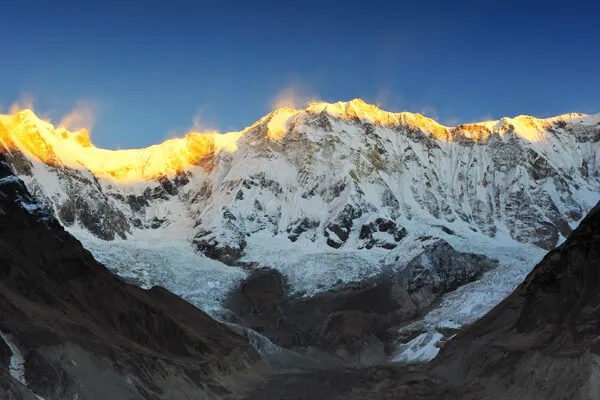
  • The Annapurna Circuit is a loop around Mount Annapurna, the 10th-highest mountain in the world. Along the trail, you will witness the incredible south face of massive Mount Annapurna and many other mountains.
  • The trail ascends and descends through rhododendron and pine forests following the stunning Marsyangdi River.
  • You will explore the picturesque Manang village and hike to Ice Lake or Green Lake from here. Both these lakes are extremely pretty.
  • The trail then enters Jarsang Khola Valley and traverses through high alpine meadows to Thorong La Pass. You will spend nights in Ledar and Thorong Phedi between Manang and Thorong La.
  • The landscapes throughout the trek are outstanding. You will see lush valleys, waterfalls, and rivers changing into alpine meadows, barren hills, and stark scenery before descending back into verdant valleys.

We love how diverse the Annapurna Circuit trek route is. There is no lack of thrills, adventure, fun, cultural encounters, mountain vistas, and wilderness.

If you are someone who would love to explore the Nepali mountains, the Annapurna Circuit trek 11 days could be a very appealing choice for you.

Mountains you can see on the Annapurna Circuit trek

You will see several mountains on the Annapurna Circuit trek. The trail offers breathtaking mountain vistas throughout the way. In addition, you will also ascend to viewpoints to witness exclusive panoramas.

On the Annapurna Circuit trek, you can see mountains like the entire Annapurna range, Dhaulagiri, Nilgiri, Fishtail, Gangapurna, Hiunchuli, Pisang Peak, Tilicho Peak, Tukuche Peak, Dhampus Peak, etc.

The most challenging section of the Annapurna Circuit trek - Thorong La Pass (5,416 m)

Crossing the Thorong La Pass is nothing less than climbing a 5,000-meter peak. The pass stands 5,416 meters above sea level and can be crossed from both sides.

However, the majority of trekkers start from Besisahar, which means following a counterclockwise direction. It offers an ample acclimatization period before you even reach the base of the pass.

Following the other way (clockwise direction), you will literally cross Thorong La on your first or second day of the trek. Plus, the ascent from Muktinath to Thorong La is much more challenging and risky.

Villages and cultural encounters on the Annapurna Circuit trek

Do not get fooled by the remoteness and inaccessibility of the Annapurna Circuit. Although it is only an adventure trail for you, many Nepalese communities reside on these remote mountain trails.

You will start trekking from Chame and walk through numerous small villages where you will meet welcoming Nepali people and enjoy the heartwarming hospitality of Magar and Gurung communities. 

Following our Annapurna Circuit trek 11 days program, you will not miss out on any village or experience. It is a wonderful, well-paced itinerary with ample acclimatization opportunities and adequate time in the mountains.

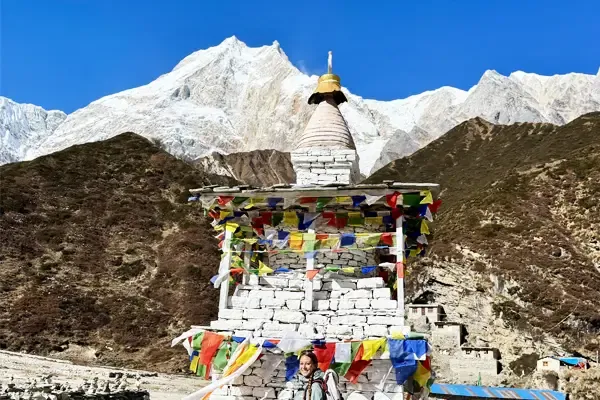
While driving from Muktinath to Pokhara via Jomsom, you will meet with the Thakali community, the ancient salt traders. There are many stupas, chortens, mani walls, and prayer flags throughout the Annapurna Circuit trail.

In addition, our guide will share the legends and myths surrounding the villagers, valleys, and mountains that will make your overall journey quite fascinating and culturally enriching.

Where does the Annapurna Circuit trek end?

We will start the Annapurna Circuit trek from Chame village, situated at 2,630 meters (8,628 ft) and end the trek at Muktinath, perched at 3,760 meters (12,623 ft). Between these two places, you will walk approximately 68 kilometers. 

If you want a longer mountain experience, you can consider extending the trek to Ghorepani and Ghandruk villages via Kalopani, Marpha, and Tatopani. 

What are the famous landmarks on the Annapurna Circuit trek route?

The apple orchards of Bhratang (2,920 m): Located between Chame and Upper Pisang

For most trekkers, Bhratang is just a passing point on the Annapurna Circuit trek. However, it is one of the largest modern apple orchards in the country.

The apple farm here spans over 37 hectares and produces some of the most delicious apples in the world. Locals even produce Apple wine, dried apple candy, and other products, which are exported globally.

We highly recommend exploring the apple farms, winery, and tasting some apple products before leaving this village.

Paungda Danda (aka Swargadwari or Haven's Gate):

Paungda Danda is a huge 1,500-meter rock rising from the Marsyangdi River. It is located between Bhratang and Dhukur Pokhari on the way to Pisang village.

It is a famous landmark among locals. Given how magnificently this vertical slab of rock soars straight up from the riverbank, it looks like it will lead you to heaven.

The upper scenic route from Pisang to Manang via Geru:

There are two routes from Pisang to Manang village. One follows the lower route, which is easy to navigate. Another is the upper route via Geru. It is a bit tough but offers jaw-dropping mountain vistas.

Geru or Ghyaru is a stunning, Tibetan-influenced village with stone houses and large stupas. It is the perfect place to capture the finest Himalayan scenery.

Braga Monastery:

While descending from Geru, you will pass by Ngawal village and reach the valley floor. The trail then goes through a small village called Braga. Here, you will explore an ancient monastery, built over 500 years ago.

The monastery hours include an incredible collection of Thangka paintings, sacred texts, and hundreds of statues.  

Ice Lake or Green Lake hike from Manang village:

Ice Lake and Green Lake are two popular acclimatization hiking destinations from Manang village.

The Ice Lake (Kicho Tal) is situated at 4,620 meters and remains partially frozen most of the year. It has a deep blue color and dramatic views of Annapurna II, III, IV, Tilicho Peak, and Gangapurna.

Green Lake (Mring Tal) is situated at 4,600 meters in a much quieter, serene location. The lake has a beautiful emerald color and a peaceful atmosphere.

Muktinath Temple:

The Muktinath Temple is a pilgrimage site for Hindus and Buddhists in Nepal. It is situated at 3,710 meters above sea level in the lower Mustang region.

The temple has an eternal flame and 108 water spouts. It is believed that if you bathe in these 108 water spouts, all of your sins will be forgiven and you will attain salvation.

If you are interested in Shaligram, it is the best place to get one.

The deepest gorge in the world (Kali Gandaki Gorge):

The Kali Gandaki Gorge is the deepest river gorge in the world. It is a deep corridor between Mount Annapurna and Mount Dhaulagiri.

As per geologists, the Kali Gandaki is one of the oldest rivers on Earth and is believed to predate the uplift of the Himalayan mountains themselves.

You will walk through the Kali Gandaki Gorge between Muktinath and Jomsom.

Explore Kathmandu and Pokhara, the two famous tourist cities in Nepal

You will start your Annapurna Circuit journey in Kathmandu, the capital of Nepal. In this city, you will spend two nights - one before starting the trek and another after ending. Your short time in Kathmandu will leave a huge impact on you. You will enjoy the bustle of Thamel and see the lifestyle of Nepalese people.

The trek ends in Muktinath. From here, you will drive to Pokhara and spend a night here. Pokhara is very loved by travelers. The city offers mesmerizing views of Fishtail and Annapurna. In Pokhara, you will enjoy the serenity of Phewa Lake and the bustle of Lakeside Market. You can try local foods and have a fun time shopping for souvenirs.

Is the Annapurna Circuit trek suitable for you?

Whether the Annapurna Circuit trek is suitable for you or not depends on your fitness and interests. It is a challenging trek, so experienced trekkers are most suited for it.

If you are a beginner trekker and wish to do the Annapurna Circuit trek, you can. All you have to do is make sure you are physically and mentally ready for the journey. So exercise for at least 8 to 12 weeks before starting the trek.

Which exercise should you do for the Annapurna Circuit trek?

  • Intensive cardiovascular exercises are a great way to start training for the Annapurna Circuit trek. It improves your stamina and endurance, which are a must to hike 6 hours a day on average.
  • Strength training is a great way to build your core, legs, and upper body. You have to be strong to push yourself relentlessly through the trek.
  • Long walks with a 5kg backpack will help you build a habit of long walking.
  • Day hikes, if there are hiking trails around your city, are an excellent way to mimic uphill and downhill climbing. It will be a fantastic addition to your Annapurna Circuit trek preparation.
  • Mentally, you have to understand and accept the challenges and limitations of the Annapurna Circuit trek. It is not an easy trek. You will be asked to push your limits again and again.

Annapurna Circuit trek cost and booking 

Our Annapurna Circuit trek cost includes all standard services, such as permits, guide, porter, accommodation, food, and transportation. You only have to take care of your personal expenses while trekking with us.

Note that expenses like international flights, travel insurance, tips for guide and porter, souvenirs, and expenses not mentioned in our Cost Includes section of this page are not covered in the Annapurna Circuit trek package.

Our Annapurna Circuit trek price is genuine and transparent. There are no hidden charges with us. Most importantly, you get the full value of your money while trekking with us.

We provide a comprehensive Annapurna Circuit trek service. Bookings are open for the Annapurna Circuit trek 2026 autumn and winter departures. Likewise, we are also taking early bookings for the Annapurna Circuit trek 2027.

Why do the Annapurna Circuit trek with Adventure White Mountain?

Adventure White Mountain not only sells the Annapurna Circuit trek package, but also helps trekkers make the most out of their journey in the Himalayas. With us, you do not just rush to complete the trek but savor every moment.

Our Annapurna Circuit trek planning, logistical support, and guides and porters are the best in the market. Our several years of expertise and flexible approach towards the trips we lead keep us apart from other Nepalese trekking agencies.

We are the best Nepali trekking agency for the Annapurna Circuit trek. By trekking with us, you will get the following perks:

  • A reliable local team that handles transportation, Annapurna Circuit trek permits, and other logistics
  • Several years of expertise and professionalism
  • Best Annapurna Circuit trek price and service in the market
  • Flexible Annapurna Circuit trek itinerary
  • Elite mountain guides and porters
  • No hidden charges
  • 24/7 support
  • First aid kit with oximeter
  • Complimentary airport transfers as per the itinerary
  • Free-of-charge duffel bag to use during the trek
  • Sustainable trek approach
  • Annapurna Circuit trek certificate
18% OFF
Price Per Person
US$820
US$1000
  • 1 - 4 paxUS$950
  • 5 - 10 paxUS$900
  • 11 - 15 paxUS$870
  • 16 - 20 paxUS$820
Speak to a Travel Expert

Annapurna Circuit Trek Detailed Itinerary

Day 1

Arrival in Kathmandu (1,324 m/4,344 ft) and transfer to the hotel in a private vehicle

You will start the journey with a smooth transition from the airport to the hotel with our team. You will stay in Thamel, the tourist hub of Kathmandu. After freshening up, we will meet for the trek briefing.

Then, you can explore the bustling streets of Thamel and buy trek gear or whatever is missing in your backpack. Enjoy the nightlife of Kathmandu and return to your hotel to spend the night.

Max Altitude: 1,324m (4,343ft)
Meals: Welcome dinner
Accommodation: Hotel
Day 2

Day 2: Drive from Kathmandu to Besisahar to Chame (2,630 m/8,628 ft)

Max Altitude: 2,630m (8,628ft)
Duration: 9-10 hours
Distance: 158 km/98 miles
Meals: Breakfast, lunch, and dinner
Accommodation: Teahouse
Mode of Transportation: Tourist bus & mountain jeep
Day 3

Trek from Chame to Upper Pisang (3,115 m/10,200 ft)

Chame ahead, the trail winds through dense forests of fir and pine, alongside the Marshyangdi River. You will pass by a lovely village called Bhratang that is known for apple orchards. From here, you will cross a suspension bridge and pass by a huge 1,500-meter rock called Paungda Danda.

Further, the trail ascends through dense forests to Dhukur Pokhari. Finally, you will follow the upper route that will take you to Upper Pisang, perched on a steep hillside. You can see excellent views of Annapurna II and other surrounding mountains from here.

Max Altitude: 3,115m (10,219ft)
Duration: 4-5 hours
Distance: 13.2 km/8.2 miles
Meals: Breakfast, lunch, and dinner
Accommodation: Teahouse
Day 4

Trek from Upper Pisang to Manang (3,540 m/11,300 ft) via Geru (upper scenic route)

Max Altitude: 3,540m (11,614ft)
Duration: 5 Hours
Distance: 17 km/10.6 miles
Meals: Breakfast, lunch, and dinner
Accommodation: Teahouse
Day 5

Acclimatization day- hike to Ice Lake

Manang is a great place to spend a day acclimatizing before ascending any further to prevent altitude sickness before crossing Thorong La Pass. In the morning, you will go on a side hike to a nearby viewpoint and spend the remaining day resting in Manang village.

You have the following hiking options:

➤ Gangapurna Lake: It is an easy 1.5 to 2-hour hike. Gangapurna Lake is a stunning emerald-green glacial lake and offers expansive views of the Annapurna Range.

➤ Praken Gompa: It is a 3 to 4-hour moderate hike. The trail is steep. Praken Gompa is an ancient monastery and also has a meditation cave. This route offers panoramic views of the Manang Valley.

➤ Ice Lake (Kicho Tal): It is a challenging 6- to 8-hour hike that takes you to 4,620 meters. You can see incredible views of Annapurna II, Annapurna III, Annapurna IV, Gangapurna, and Tilicho Peak while hiking to Ice Lake. The lake itself is also quite pretty.

Max Altitude: 4,623m (15,167ft)
Duration: 4-5 hours
Meals: Breakfast, lunch, and dinner
Accommodation: Teahouse
Day 6

Trek from Manang to Ledar (4,250 m/13,943 ft)

From Manang village, you will first hike to Tenki. You will leave the trees behind and enter arid alpine terrain, Tenki onwards. Cross a stream and slowly ascend along the Jarsang Khola River Valley. The trail will take you to Gunsang village and continues to Yak Kharka.

Yak Kharka is also a popular resting point on the Annapurna Circuit. Here, you will see mesmerizing views of Mt. Gangapurna, Annapurna II, and Tilicho Peak. Finally, you will ascend for one more hour from Yak Kharka to reach Ledar, a small settlement located beneath Chulu West and Thorong Peak.

Max Altitude: 4,250m (13,943ft)
Duration: 3 hours
Distance: 9 km/5.5 miles
Meals: Breakfast, lunch, and dinner
Accommodation: Teahouse
Day 7

Trek from Ledar to Thorong Phedi (4,600 m/15,091 ft) or High Camp

Leaving Ledar behind, you will ascend for 2 to 3 hours along winding mountain ridges and cross a river to reach Thorong Phedi. It is a very popular spot to spend a night before the Thorong La push.

Instead of staying at Thorong Phedi, we will ascend to High Camp. It will be a 1 to 1.5-hour hike. Spending a night at High Camp gives you early access to Thorong La Pass compared to other trekkers.

Max Altitude: 4,600m (15,091ft)
Duration: 4-5 hours
Distance: 7.3 km/4.5 miles
Meals: Breakfast, lunch, and dinner
Accommodation: Teahouse
Day 8

Trek from Thorong Phedi to Muktinath (3,760 m/12,623 ft) via Thorong La pass (5,416 m/17,756 ft)

On this day, we will begin ascending to the top of the pass around 4:00 AM. Climbing this early allows you to avoid the notorious afternoon wind. Immediately after leaving High Camp, you will follow a steep, zigzag path up a high-altitude plateau.

The trail is rugged and covered with scree, loose gravel, and snow patches (depending on the season). Soon, you will reach the top of the Thorong La Pass, which will unfold a breathtaking mountain panorama in front of you.

After enjoying the view, you will descend to Muktinath. It will be a steep descent. Muktinath is a pilgrimage site in Nepal, significant for both Hindus and Buddhists.

Max Altitude: 5,416m (17,769ft)
Duration: 8-9 hours
Distance: 15.6 km/9.6 miles
Meals: Breakfast, lunch, and dinner
Accommodation: Teahouse
Day 9

Drive from Muktinath to Pokhara (822 m/2,697 ft)

We end the trek in Muktinath. From here, we will drive through the Kali Gandaki Gorge. It is the deepest gorge in the world. The road descends through villages such as Jomsom, Marpha, and Tatopani. 

You will enjoy beautiful mountain vistas, apple & orange orchards, and lush hills as you descend to Pokhara. The road between Muktinath and Beni is dusty and unpaved. So, it will be a bumpy ride till Beni. 

Spending the evening enjoying the tranquility of beautiful Phewa Lake and bustling Lakeside Market.

Max Altitude: 822m (2,696ft)
Duration: 4-5 hours
Distance: 175 km/109 miles
Meals: Breakfast, lunch, and dinner
Accommodation: Teahouse
Day 10

Drive back to Kathmandu (1,324 m/4,344 ft)

Leaving Manang behind we proceed towards Thorang La. It is an ascend trail to arrive at Tenki. Walking along Jhrsang Khola we reach Ledar. This are is popular for snow leaopard and musk deer. We sepnd night in Ledar.

Max Altitude: 1,324m (4,343ft)
Duration: 6-7 hours
Distance: 205 km/127 miles
Meals: Breakfast only
Accommodation: Hotel
Day 11

Departure from Kathmandu

You will leave for your home or next destination on this day. Our team will escort you to the international airport as per your flight schedule.

Meals: Breakfast only
Accommodation: None

We would like to inform our valued clients that the time duration is depending on the trekker and their physical fitness.
B L D mean Breakfast, Lunch, and Dinner 

Need Trip Help? We’re Here.
Not finding what you need? No problem, our travel experts would love to create a custom package just for you!

Cost Details

Includes

Airport Transfers

  • Airport pick-ups and drop-offs from Tribhuvan International Airport by private four-wheeler.

Transportation

  • Drive from Kathmandu to Besisahar, Nayapul to Pokhara, and Pokhara to Kathmandu by Tourist Bus/Sharing Jeep 

Accommodation

  • 2-night stay in Kathmandu in a three-star hotel
  • 1-night stay in Pokhara in a three-star hotel
  • 8-night stay in a teahouse during the trek

Meals

  • Breakfasts in Kathmandu and Pokhara (included in your hotel room)
  • 1 welcome dinner in Kathmandu on your arrival day
  • 3 meals a day (breakfast, lunch, and dinner) during the trek, accompanied by tea or coffee
  • Clean drinking water

Guide and porter

  • Licensed, professional trekking guide who can speak your language (all of our guides can speak Nepali and English)
  • Assistant guide if the group has more than 8 trekkers
  • One porter for two trekkers
  • Daily allowance, salary, permits, and insurance for our guides and porters

Permits

  • Annapurna Conservation Area Project (ACAP) permit
  • TIMS Card

Company's Service Charge

  • Company's service charge
  • All taxes incurred during the trek

Trekking Essentials and Safety

  • Annapurna Circuit trek map
  • Duffel bag (70 to 80 L) to use during the trek
  • First aid kit with oximeter
  • Satellite phone carried by our guide to stay connected with us during the trek

Additional Benefits

  • Free luggage storage at the Adventure White Mountain office during the trek duration
  • Trekking gear rental service at the best cost
  • Adventure White Mountain T-shirt and cap
  • Annapurna Circuit trek achievement certificate

Excludes

  • Lunch and dinner in Kathmandu and Pokhara
  • All kinds of drinks: tea, coffee, juice, water, beer, whiskey, etc
  • International flights to and from Kathmandu
  • Nepal travel visa fee
  • Card payment: 4% Extra Bank service charge
  • Travel insurance (must cover helicopter evacuation and medical bills)
  • Guide and porter tips (mandatory)
  • Personal Shopping
  • Bar bills and extra food
  • Additional accommodation and food if you stay beyond the fixed itinerary
  • Extra personal expenses during the trek, like hot showers, charging, WiFi, etc
  • Any expense not mentioned in our Cost Includes section

Dates & Availability

i. Our proposed Annapurna Circuit trek itinerary is customizable. You can customize the itinerary and services as per your interests. For that, you need to do a private trek with us.

ii. The fixed departure Annapurna Circuit trek is best for trekkers who love to travel with like-minded people and like making new friends. There are usually up to 8 trekkers in our fixed departure groups.

iii. Private treks cost a bit more because there are no shared expenses. However, a private trek gives you the flexibility to change the itinerary, pace, and services during the trip. It is ideal for travelers who love their space and privacy.

iv. We guarantee 100% departure. We only cancel/postpone the trip if there is an unforeseen circumstance (such as a natural disaster, political unrest, or very bad weather) that is beyond our control and may jeopardize your safety.

Add-ons

Adventure White Mountain: Our decades of experience have positioned us as leaders in Everest trekking adventures. As we continue to push the boundaries of excellence, we're excited to present a selection of exclusive add-ons designed to elevate your Everest Base Camp Trek experience!

  • Extra Porter Service (USD 200): Let our skilled, strong porters carry your gear so you can focus on the breathtaking beauty of the Everest region. Each porter can transport up to 25 kg and can be shared by two trekkers.
  • Private Jeep From Kathmandu to Chame – USD 400: If you want to drive by Private jeep from Kathmandu to Chame village, we will be happy to provide you with the additional cost of USD 400. You can add this option while making your reservation.
  • Private Jeep from Muktinath to Pokhara – if you want to drive by private jeep from Muktinath to Pokhara, it is also possible for USD 250. You can add this option while making your reservation.
  • Extra night accommodation in Kathmandu at USD 50: If you plan to arrive earlier than the trip departure date or stay extra nights in Kathmandu after the trek and would like to continue at our hotel, you can add extra nights’ accommodation from our add-on option. It will cost USD 50/night, including breakfast. We use a 3-star hotel in Kathmandu.
  • Pokhara to Kathmandu Airplane– USD 124: Prefer to fly straight back to Kathmandu from Pokhara instead of a long drive? You can add this option while making your reservation.

With these tailored add-ons, you can transform your Everest Base Camp Trek into a truly exceptional adventure. At Adventure White Mountain, we’re committed to going above and beyond so you can reach new heights on your journey. Secure your trek today and turn your Everest adventure into an unforgettable success story.

US$820
US$1000

Equipment Lists for Annapurna Circuit Trek

Packing for the Annapurna Circuit trek can take more time than you may imagine because you have to arrange and pack a lot of things. So, do not keep it for the last-minute activity.

Note that you can literally bring your casual clothes and essentials to Kathmandu and buy all trekking clothes and gear here. You can get the best quality products at a very reasonable price.

In addition, rental options are also available for gear such as sleeping bags, duffel bags, trekking poles, down jackets, etc.

Upper Body Layers
  • Comfortable underwear
  • Trekking t-shirt
  • Scarf
  • Gloves
  • Thermal layer (bodywarmers, sweater, fleece)
  • Windproof/waterproof jacket
Lower Body Layers
  • Trekking pants
  • Windproof/waterproof pants
  • Socks
Footwear & Accessories
  • Trekking boots
  • Casual slippers
  • Daypack with a good waist support band
  • Duffel bag
  • Trekking poles
  • Sleeping bag & liner
  • Gaiters
  • Water bladder
Head & Sun Protection
  • Sunhat
  • Beanie
  • UV sunglasses
  • High SPF
  • SPF lip balm
Personal & Medical Kits
  • Moisturizer and body lotion
  • Toilet paper
  • Personal first aid kit
  • Wet tissues
  • Toothpaste and toothbrush
  • Soap and shampoo
  • Hand sanitizer
  • Whistle (optional)
  • Electrolyte
  • Comb
  • Pocket mirror
Travel Documents
  • Travel insurance documents
  • Nepali currency
  • Passport with six months of validity
  • Nepal travel visa
  • Trek permits
  • Debit/credit cards
Miscellaneous
  • Water bladder (recommended)
  • Reusable water bottles and water purification tablets
  • Universal charger
  • Power bank
  • Solar charger
  • Map
  • Torch
  • Camera and mobile
  • Snacks
  • Ziploc bags to store used clothes and other things

Essential Information

Annapurna Circuit trek permits

To do the Annapurna Circuit trek, you must have two permits: the Annapurna Conservation Area Project (ACAP) permit and the TIMS Card. We have included both permits in our Annapurna Circuit trek package. Our team obtains them on your behalf, saving you 2 hours of legwork.

For the Annapurna Circuit trek, two permits are mandatory - the Annapurna Conservation Area permit and the TIMS Card. Our Annapurna Circuit trek package is inclusive of both permit fees.

After the trek confirmation, our team takes care of obtaining the permits. They will get them on your behalf. So, you do not have to visit the related offices.

The cost of both permits is:

  • Annapurna Conservation Area Project (ACAP) permit cost for foreigners: NPR 3000 per person
  • Annapurna Conservation Area Project (ACAP) permit cost for SAARC nationals: NPR 1000 per person
  • TIMS Card cost for SAARC nationals: NPR 600 per person
  • TIMS Card cost for individual trekkers: NPR 2000 per person
  • TIMS Card cost for agency trekkers: NPR 1000 per person

The flora and fauna of the Annapurna Conservation Area

The Annapurna Conservation Area is spread over 7,629 km². Although you will only explore a fraction of the conservation area during the Annapurna Circuit trek, the diversity is unprecedented due to the changing elevation.

Starting the trek from subtropical forests and terraces, you will ascend to alpine forest and meadows. Then, the trail enters the glacial zone.

You will see a variety of plants and flowers while trekking. Encounters with wild animals are rare because they don't come near human trails. But you will see many birds, butterflies, and insects.

For your information, the Annapurna Conservation Area is home to wild animals such as the grey wolf, the Himalayan musk deer, red panda, Himalayan brown bear, and many species of birds.

Best time to do the Annapurna Circuit trek

The best time to do the Annapurna Circuit trek is the spring and autumn seasons. These seasons have great weather and climate conditions for high-altitude treks such as the Annapurna Circuit.

Spring brings the charm and color of rhododendrons and other wildflowers. Likewise, autumn has the zest of festivity in the air. What is common in both seasons is stable weather, pleasant climate, excellent visibility, and safe trail conditions.

Annapurna Circuit trek temperature in spring:

  • Day high: 5°C to 10°C
  • Night low: −10°C to 0°C
  • Lower trails: 15°C to 22°C

Annapurna Circuit trek temperature in autumn:

  • Day high: 3°C to 8°C
  • Night low: −8°C to −3°C
  • Lower trails: 14°C to 20°C

Annapurna Circuit trek in the off-season

The summer/monsoon and winter seasons are not that popular for trekking in the Himalayas due to additional weather challenges.

Summer/monsoon (June to August):

The Annapurna region is lush and green from June to August. If you are interested in exploring the rich biodiversity of Annapurna Conservation Area and Annapurna Sanctuary, you should do the Annapurna Circuit trek in the summer/monsoon season.

Due to frequent rain and poor trail conditions, we recommend the Annapurna Circuit trek between June and August only to experienced trekkers.

The challenges of this season are slippery, muddy tracks, leeches, and landslide risks. Due to the cloudy sky, the visibility and views are not great. However, if you are into magical monsoon scenery, you will not be disappointed.

On the bright side, the Annapurna Circuit trek route is empty in the summer/monsoon period. You can have whole landscapes, encounters, and experiences to yourself.

Winter (December to February):

The temperature drops significantly in the Himalayas in winter. It is the coldest time of the year. The trail is covered with snow. The landscapes are quiet, cold, and dramatic.

Although weather challenges are high in the winter season, the popularity of winter mountain adventures is gradually increasing.

The Annapurna Circuit changes to a winter wonderland. The mountain views are excellent on clear days. Some days can be gloomy, but they also have their own charm.

You have to wear layered clothes properly during winter trekking and use special winter gear. The stillness of the winter season is unmatched. The journey will be demanding but heavenly.

Annapurna Circuit trek difficulty

The Annapurna Circuit trek is a strenuous trek with a high mountain pass crossing and many sharp ascents and descents. Every day you will experience long walking and constantly changing elevation and environment.

Unlike other Annapurna Circuit trek itineraries, this is quite long and arduous because it follows the complete circuit. Therefore, you will spend a long time in the mountains.

It means you have to adjust to simple service for a long time. Trekking infrastructure is not that bad on the Annapurna Circuit trek route. Still, trekkers have to adjust a lot.

  • Trek distance: You will cover approximately 68 kilometers (42 miles) following our 11-day Annapurna Circuit trek itinerary
  • Difficulty: Strenuous
  • Daily walking: 6 hours on average
  • Daily elevation gain: 400 to 700 meters
  • Max elevation: 5,416 meters (17,769 ft) - Thorong La Pass

Tackling challenges on the Annapurna Circuit trek

There are solutions and hacks to all the challenges you will come across during the Annapurna Circuit trek. You just have to be well-informed. Our guide will be there to assist you with all challenges, but being informed will be quite helpful.

  • Knee problem: Your knees will be in pain. Ascending and descending both will bring pressure on your knees. The strategy here is to use trekking poles actively throughout the trek. Likewise, shorten your stride and consider neoprene knee sleeves.
  • Pacing and ego problem: You are not to race anyone in the Himalayas. A successful trek depends on your pace and understanding your limits. You will be fighting yourself, not others. So, work with your mind and body and not against them.
  • Cold management: The higher you ascend, the colder the climate gets. Daytime will be warmer, but temperatures drop at night and in the mornings. You can feel cold while trekking, too. So, wear clothes in layers and carry a sleeping bag. Use your tumbler for extra warmth at night. Fill it with hot water and keep it close to your body.
  • Route safety: Follow your guide's instructions. He knows how the trails are, what the risky zones are, and how to navigate challenging sections. You have to maintain your balance and be patient.
  • Mental challenges: You will push yourself mentally a lot, too, during the Annapurna Circuit trek. All the physical challenges will mentally challenge you. In addition, the weather, climate, limited facilities, etc, put more pressure. Understand and accept the challenges and limitations of the Himalayas.
  • Altitude sickness: Rest and get medicine from your guide. Drink ginger-honey tea and garlic soup daily. If your symptoms do not get better, rest. If needed, descend. Do not ascend further with altitude sickness symptoms.

Altitude sickness preventive measures:

Many trekkers face altitude sickness during the Annapurna Circuit trek. It is common and at the same time also avoidable if you follow preventive measures and our acclimatization plan.

Above 2,500 meters, the pressure of oxygen drops. Your body begins to adapt to high elevation. However, if you ascend too quickly, you may suffer from altitude sickness.

If it is not treated on time, it can progress to a severe form of altitude sickness, and that can involve emergency helicopter evacuation and hospital assistance.

So, do not ignore signs of altitude sickness and address them on time. The symptoms of altitude sickness are loss of appetite, trouble sleeping, nausea, dizziness, breathlessness, headache, etc.

Preventive measures of altitude sickness include drinking plenty of water, ascending slowly, maintaining your pace, avoiding alcohol before Thorong La Pass, eating carbohydrate-rich food, and getting ample sleep.

Annapurna Circuit trek accommodation

The Annapurna Circuit trek route has traditional teahouse accommodation. It provides simple yet comfortable rooms and clean bathrooms. Rooms are usually shared between 2 or 3 trekkers. Single rooms are limited and cost a few extra bucks.

At lower elevations, you may get attached bathrooms in some teahouses, but mostly they are common and built outside of the main buildings.

These days, western-style toilets are available in many lodges, but the old ones still have squat toilets. Dining rooms are a great place to not only have food but also warm up and socialize with other trekkers and locals. 

Our Annapurna Circuit trek package includes twin-shared rooms.

You can upgrade to a premium teahouse in some villages such as Manang and Muktinath.

Tips:

The tips below will help you have the best accommodation experience during the Annapurna Circuit trek:

  • Standard rooms are simple. They include a bed or two, a table, and a window- nothing special. However, the comfort in the premium teahouse is next level. If you do not mind a little extra expense, we highly recommend experiencing premium mountain lodges in 1-2 villages.
  • The walls in the teahouse are quite thin. So, you can hear noise, especially during the peak seasons when the trekkers keep coming and going. Earplugs will be very helpful.
  • Fill your water bottle with hot water and use it as a hot water bag during the night for extra warmth and comfort.
  • Buy or rent a high-quality sleeping bag as the rooms can get very cold at night, and a blanket provided by the teahouse might not be enough.
  • Carry 1-2 pairs of sleeping clothes such as t-shirts, pants, hoodie/sweater, socks, beanies, and gloves. It is great to keep you fresh and light.

Hygiene during the trek:

  • Wash your hands before and after every meal and after using toilets.
  • Carry hand sanitizer, wet wipes, and toilet paper in your backpack.
  • Drink only boiled water throughout the trek.
  • Taking a shower after Manang village is not wise because of the high altitude sickness risk. Instead, keep yourself refreshed using wet wipes.
  • Keep a balance between using dry shampoo and oiling your hair.
  • Pack a separate pair of slippers for teahouses. It will give you a break from exhausting trekking boots.
  • Pack all essential toiletries such as biodegradable soap, shampoo, face towel, moisturizer, nail clippers, feminine hygiene products (if needed), toothbrush/toothpaste, etc.

Food and drinking water during the Annapurna Circuit trek

In Kathmandu and Pokhara, you get breakfast in the package. For lunch and dinner, you have to purchase on your own. During the trek, we provide breakfast, lunch, and dinner per day. All three meals will be given as per the menu of the teahouses.

Almost all the tea houses have the same menu. You will regularly eat dal bhat. It is the freshest and most delicious option. You can also get unlimited refills of rice, dal, and veggies in most teahouses.

Some other common dishes on the menu include fried rice, chapati, thukpa, thenduk, Tibetan bread, stew, porridge, soups, pasta, momo, chowmein, curries, pancakes, oats, eggs, etc.

As the elevation increases, your appetite may decrease. It is a normal physiological response of your mind and body at high elevations. Still, you have to eat all three meals to keep going.

Food tips:

  • Eat even if you are not hungry.
  • Choose carbohydrate-rich meals. Your body needs enough carbs to provide energy at high altitude.
  • Digestion slows down at high altitude. So, eat an early dinner. It will not disrupt your sleep.
  • Have garlic soups every evening and ginger-honey tea every morning. Both these drinks will help you acclimate and keep your immunity strong.
  • Carry snacks to munch on while hiking. You can pack energy bars, nuts, dark chocolate, instant noodles, electrolytes, crackers, dried fruits, mints, hard candies, etc.

Communication

Communication during the Annapurna Circuit trek is not that good. Once you enter deep into the valleys and forests, there is no network. WiFi is available in many villages, but the network is not reliable.

You have to prepare your mind not to use the internet during the trek. Inform your loved ones about the trek schedule, so they do not worry if they cannot reach out to you.

Travel insurance

Travel insurance is a mandatory requirement for the Annapurna Circuit trek. It must cover emergency helicopter evacuation and hospital bills. Double-check your travel insurance eligibility for high-altitude adventures in Nepal.

Luggage weight limit

During the Annapurna Circuit trek, you can put up to 20 kg in a duffel bag and 3-5 kg in your backpack. Duffel bags are carried by our porters, and you will carry the backpack by yourself.

You can leave any unwanted luggage at our office during the trek duration or at your hotel's locker room. It will be a free service. Your luggage will be safe.

The duffel bag weight limit is strict. You can upgrade the weight limit by paying extra.

Tips for the guide and porter

Tipping the guide and porter is a crucial part of the trek in Nepal. It is time to appreciate your guide and porter for their service and hard work. You can tip them as per your wish and satisfaction level.

We do our best to pay the maximum salary we can. Still, the base wage is often minimum. They are in work mode 24/7 and carry a huge responsibility.

Along with your safety, the guide and porter also enhance the overall trek experience with their knowledge, stories, and funny behavior.

So, tipping them is the right thing to do. You can tip 20% to 25% of the package cost. Usually, the guide keeps a bigger part of the tip (around 60%).

Alternatively, you can tip USD 10 to USD 12 per day to the porter and USD 15 to USD 20 per day to the guide.

Nepal tourist visa

To do the Annapurna Circuit trek, all foreigners (except Indians) have to obtain a Nepal tourist visa.

You can obtain the visa either from the Nepalese Embassy/Consulate Office in your country or upon arriving at Kathmandu Airport (on-arrival travel visa).

Note that the on-arrival travel is not valid for travelers from some countries. So, kindly check the official site of the Nepal government for up-to-date information.

On-arrival travel visa:

The on-arrival travel visa is available at all international airports and border entry points in Nepal.

You can pre-apply for the on-arrival visa (15 days before you arrive in Nepal) that expedites the visa process at the airport.

Or, you can complete the visa form and pay the fee upon arriving at the airport.

Nepal tourist visa fees

  • 15 days: USD 30
  • 30 days: USD 50
  • 90 days: USD 25

Our Annapurna Circuit trek package does not cover travel visa fees.

Documents required for a tourist visa:

  • Valid passport (minimum 6 months' validity)
  • Completed visa form
  • Visa fee (cash/card)
  • Passport-size photo (rarely required now—often taken digitally)

Annapurna Circuit Trek FAQs

Can you take a jeep on the Annapurna Circuit route?

The Annapurna Circuit is not entirely motorable. The road only extends till Manang village on one side and Muktinath on the other. In between these two places, you have to hike.

How far is the Annapurna Circuit from Kathmandu?

From Kathmandu, the starting point (Besisahar) of the Annapurna Circuit trek is situated around 190 km (118 miles).

Is the Annapurna Circuit trek safe?

Yes, the Annapurna Circuit trek is safe. It is a well-established trekking route with an incredible teahouse network and human settlements throughout the way. Locals are friendly and welcoming. In addition, you will be trekking with a reliable mountain guide and porter, so there is nothing to worry about.

What gear do you need for the Annapurna Circuit trek?

For the Annapurna Circuit trek, you will need the following gear: moisture-wicking base layers, thermal clothes, a down jacket, a waterproof/windproof jacket, trekking pants, gloves, a beanie, a buff, trekking poles, trekking boots, UV sunglasses, etc.

Are there ATMs on the Annapurna Circuit route?

No, there is no ATM on the Annapurna Circuit trek, especially after Manang village. Likewise, you may find an ATM in Muktinath or Jomsom. Note that ATMs in Muktinath and Jomsom are not that reliable. They can be out of order sometimes due to no cash or electricity. 

Do I need crampons for Thorong La Pass?

In the winter season, you may need microcrampons for Thorong La Pass. It depends on the pass condition. If there is fresh snow, ice, or frozen sections, we may use a microspoon to cross the pass, as it makes navigating on those trail conditions safe and easy.

What kind of sleeping bag is needed for the Annapurna Circuit?

You will need a high-quality sleeping bag for the Annapurna Circuit trek. It should be rated for -10°C to -15°C (14°F to 5°F). You can buy or rent a sleeping bag in Thamel.

What shoes are best for the Annapurna Circuit trek?

For the Annapurna Circuit trek, you will need well-fitted trekking shoes. Make sure to break in your shoes before the trek begins.

How crowded is the Annapurna Circuit trek?

The Annapurna Circuit trek is one of the most famous trekking routes in Nepal. So, there are considerable numbers of trekkers during the peak seasons. In spring and autumn, the Annapurna Circuit trail remains quite busy.

Can you trek the Annapurna Circuit without a guide in 2026?

Legally, foreigners are allowed to traverse the Annapurna Circuit without a guide in 2026. However, the rules may change, so we advise you to confirm the latest requirements when you book the trek.

What are the alternatives to the Annapurna Circuit trek?
Why book the Annapurna Circuit Trek with a local Nepal trekking company?

Booking the Annapurna Circuit trek with a local company like us allows you to have clear trip details. You will be directly contributing towards supporting local businesses in Nepal, and there will be no middleman hiking up the overall price. You will have a more intimate, safe, and knowledgeable trek experience.

Where is the Annapurna Circuit trek located?

The Annapurna Circuit trek is located in north-central Nepal within the Annapurna Conservation Area. The circuit encircles Mount Annapurna, the 10th-highest mountain in the world. The Annapurna Circuit trail goes through lush subtropical Marsyangdi River Valley to alpine pastures of Yak Kharka and barren, arid landscape of lower Mustang, crossing the Thorong La Pass.

How long is the Annapurna Circuit trek?

The Annapurna Circuit trek is a long mountain adventure. Following our classic Annapurna Circuit trek itinerary, you will trek around 68 kilometers (42 miles).

How many days does the Annapurna Circuit trek take?

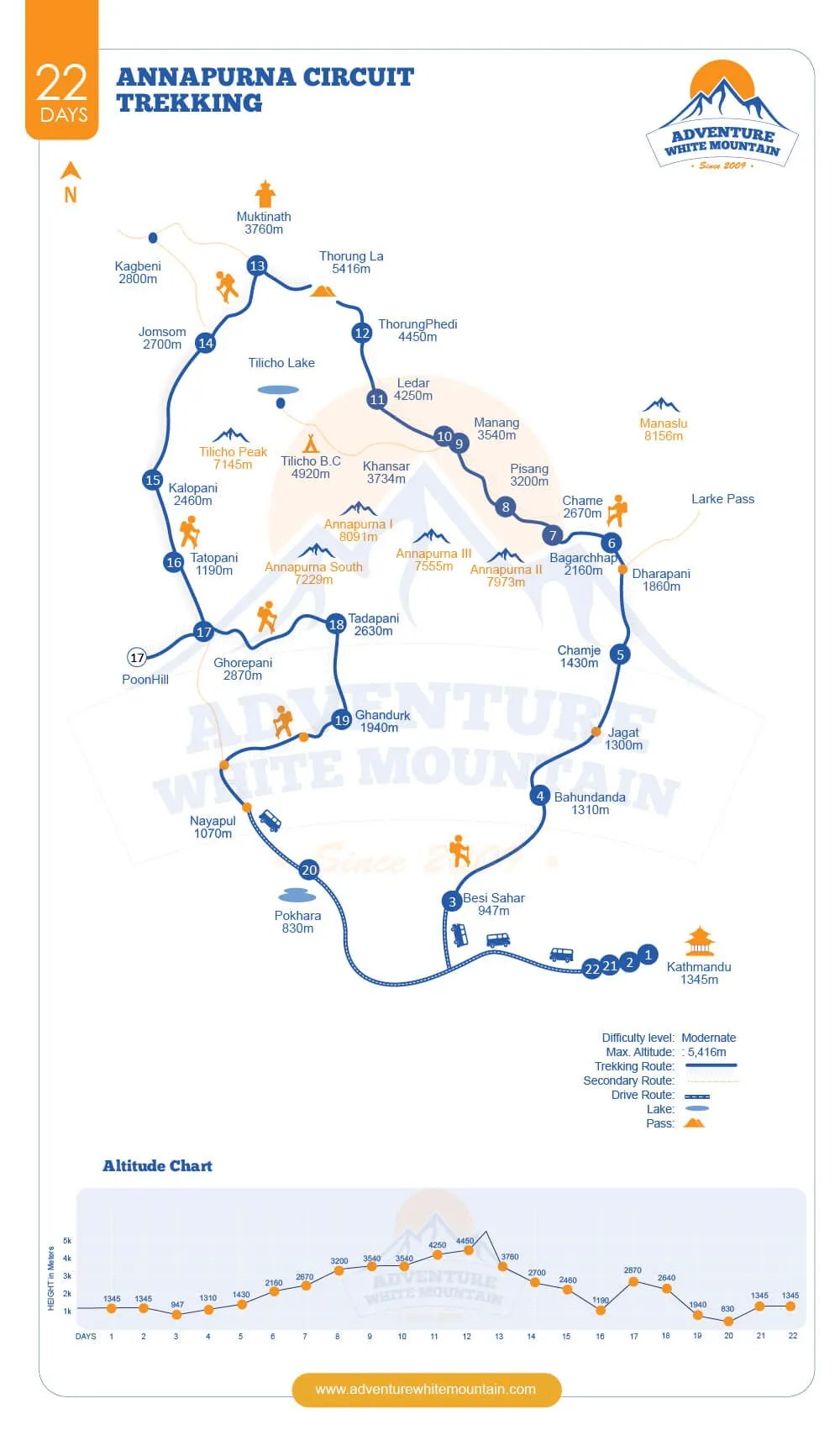
Depending on the itinerary you follow, you can complete the Annapurna Circuit trek in 11 to 22 days. Our itinerary is 11 days. It follows the classic Annapurna Circuit trail and includes a comprehensive adventure of the Annapurna region, including villages such as Chame, Upper Pisang, Manang, Ledar, and Muktinath. 

Why is the Annapurna Circuit trek famous?

The Annapurna Circuit trek is considered one of the world's greatest trekking routes that offers remarkable cultural diversity and dramatic landscapes. On a single journey, you will experience everything from lush forests, cascading waterfalls, terraces, and lush valleys to alpine meadows, high-mountain deserts, deep gorges, and windswept landscapes.

Is the Annapurna Circuit trek worth it?

If you are looking for the adventure of a lifetime and an unforgettable Himalayan trip, the Annapurna Circuit trek is absolutely worth it. It is such an incredible trek with phenomenal mountain vistas, diverse landscapes, immersive cultural experiences, and adventurous trails.

What mountains can you see on the Annapurna Circuit trek?

You will see countless mountains during the Annapurna Circuit trek, including 8,000-meter mountains such as the Annapurna and Dhaulagiri. Along with that, you will also witness wonderful views of Nilgiri, Gangapurna, Hiunchuli, Fishtail, Chulu West, Tukuche Peak, Tilicho Peak, Ngadi Chuli, Dhampus Peak, etc.

What is the highest point of the Annapurna Circuit trek?

The highest point on the Annapurna Circuit trek is Thorong La Pass at 5,416 meters (17,769 ft). It is the highest mountain pass in Nepal. Thorong La Pass connects the Annapurna region with the Mustang region.

How difficult is the Annapurna Circuit trek?

The Annapurna Circuit trek is considered a challenging trek due to its long duration, high altitude, varying climate, and demanding ascent over Thorong La Pass. It is not a technical trek, but daily, almost 6 hours of walking for over two weeks is not an easy feat, especially for beginner trekkers.

Can beginners do the Annapurna Circuit trek?

The Annapurna Circuit trek is not recommended for beginner trekkers because of its high challenges. But is anything stopping you from doing the Annapurna Circuit trek as a beginner trekker? No. If you are confident about your fitness and can walk 6 hours a day at high altitude, you can do the Annapurna Circuit trek with us.

Is the Annapurna Circuit trek harder than the Everest Base Camp?

Yes, the Annapurna Circuit trek is harder than the Everest Base Camp trek. The Annapurna Circuit includes many sharp ascents and descents, a wide variety of terrain, narrow trails, and a high mountain pass.

Do you need prior trekking experience for the Annapurna Circuit?

Prior trekking experience is highly recommended before the Annapurna Circuit trek. However, it is not a mandatory requirement. Many first-time trekkers complete the Annapurna Circuit trek without prior trek experience every year. One non-negotiable thing is your fitness and preparation.

How much walking is required each day?

You will walk approximately 6 to 7 hours a day during the Annapurna Circuit trek. On most days, the distance ranges between 9 and 15 kilometers.

Where does the Annapurna Circuit trek start and end?

You will start the Annapurna Circuit trek from Chame and end it in Muktinath, making a complete circle around Mount Annapurna.

Can you customize a longer version of Annapurna Circuit trek?

Yes, we can customize a long Annapurna Circuit trek itinerary including places such as Tilicho Lake, Jomsom, Kalopani, Tatopani, Ghorepani, Poon Hill, and Ghandruk. 

Can you combine the Annapurna Circuit with Tilicho Lake?

Absolutely Yes. You can combine the Annapurna Circuit trek with an excursion to Tilicho Lake. Tilicho Lake is one of the most stunning Himalayan lakes at 4,919 meters above sea level. You need 3-4 extra days to extend the Annapurna Circuit trek itinerary to Tilicho Lake.

What is Thorong La Pass?

The Thorong La Pass is a high mountain pass, standing at 5,416 meters (17,769 ft) above sea level. It is the highest mountain pass in Nepal. The pass connects the Annapurna region with the Mustang region.

What is the best time to do the Annapurna Circuit trek?

The best time to do the Annapurna Circuit trek is spring (March to May) and autumn (September to November). These seasons are great in terms of stable weather, pleasant climate, visibility, and jaw-dropping mountain vistas. There can be occasional rainfall till mid of September, so you can consider trekking in late September.

Can you trek the Annapurna Circuit in winter?

It is possible to trek the Annapurna Circuit in winter (December to February). However, it is the coldest time of the year, and higher sections can be covered with snow. You may also have to use microspikes to cross the Thorong La Pass. If the weather and trail conditions get too unfavorable, the pass may be closed for a few days.

Is the Annapurna Circuit possible during the monsoon?

Monsoon (June to August) is the most unfavorable time of the year for the Annapurna Circuit trek. The lower sections receive frequent rainfall. So, the trails are muddy, slippery, and involve high risks of landslides. Similarly, there are a lot of leeches in the lower forests. Visibility is not great, and dense clouds in the afternoon usually block the views.

How is the weather on the Annapurna Circuit trek?

The weather on the Annapurna Circuit trek route significantly varies as the elevation increases and decreases. The higher you ascend, the lower the temperature gets. The daytime is usually warm and comfortable. However, nights and mornings are colder.

How much does the Annapurna Circuit trek cost?

The Annapurna Circuit trek costs between USD 1,300 and USD 1,480 per person or more. Depending on your itinerary, services in the package, and group size, the package cost may increase or decrease.

How much money should I bring on the trek?

For personal expenses, such as bar bills, WiFi, hot showers, and charging, you can budget around NPR 1,500 a day. It will be more than enough. If you like shopping for small souvenirs in the villages, you can carry some extra money. Also, make sure to withdraw tips for your guide and porter. 

How much does a guide cost for the Annapurna Circuit?

For the Annapurna Circuit trek, a guide may cost between USD 20 and USD 30 or more per day, depending on their expertise. Our Annapurna Circuit trek package is inclusive of a professional guide and a porter, so you do not have to hire them personally. Tips are not covered in the package, though.

What kind of accommodation is available on the Annapurna Circuit?

The Annapurna Circuit mainly has simple teahouses and mountain lodges. Services are better at lower parts of the trail than at higher elevations. Rooms are mostly twin-shared, and bathrooms are common. Overall, you will get simple, cozy accommodation to spend the nights.

Are there hot showers on the Annapurna Circuit?

Hot showers are usually available in many villages. Some places may charge you a few extra bucks for the service. We recommend avoiding the shower after Yak Kharka and till Muktinath Temple to avoid altitude sickness.

What Our Clients Say

Marianne Siddnis
Marianne Siddnis
Belgium
Annapurna Circuit Trek

Highly recommended for any open-minded adventurers willing to connect with friends they have not yet met. As a retired geoscientist, I know that visiting the top of the world would be spectacular, and it truly...

January 04, 2022
Hana vanala
Hana vanala
Finland
Best Guide amazing Experience

 I had an amazing time on my Annapurna Circuit Trek, thanks to the best, most experienced, sweetest, loveliest, and most knowledgeable guide, Sambhu
He made the whole experience spectacular and fun, and I felt...

October 13, 2021
T
Tammy Alde Stone
United States
Outstanding Experience

Hiked the Annapurna Circuit with the incredibly capable, honest, helpful, and knowledgeable guide Dipak and porter Dipen. This adventure is an all around amazing experience, and sincerely made so much better by the support, care,...

October 13, 2021

You May Also Like

Gokyo Valley Trek
Duration: 14 Days
Difficulty

Gokyo lake Trek

Price from
US$1350US$1490
Starts from
Kathmandu
Ends at
Kathmandu
Group Joining Trip Available
Manaslu Circuit Trek
Duration: 13 Days
Difficulty

Manaslu Circuit Trek

Price from
US$980US$1180
Starts from
Kathmandu
Ends at
Kathmandu
Annapurna Base Camp Trek
Duration: 13 Days
Difficulty

Annapurna Base Camp Trek

Price from
US$850US$1050
Starts from
Nayapul
Ends at
Jhinu Danda
Need Help? Call Us+977 9851154520