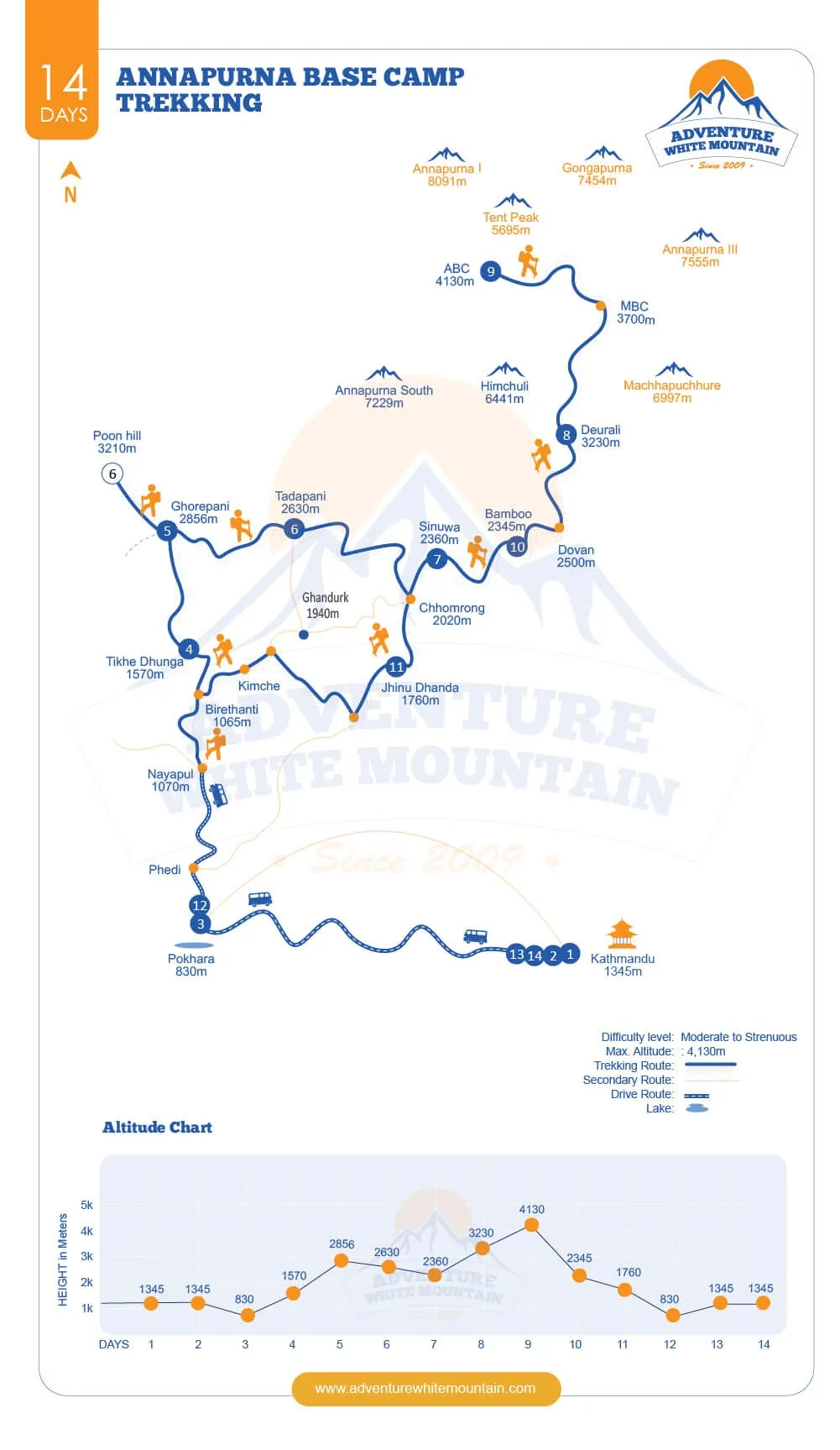
Annapurna Base Camp trek permits
The Annapurna Base Camp trek requires two permits, and our package includes both. You will need the Annapurna Conservation Area Project (ACAP) permit and TIMS Card for this trek.
There are checkpoints at Nayapul, Tikhedhunga, Chhomrong, and other areas. So, do not think of entering the region without the permits. It is illegal and can cost you heavily.
The Annapurna Base Camp trek permit costs are:
- Annapurna Conservation Area Project (ACAP) permit cost for foreigners: NPR 3000 per person
- Annapurna Conservation Area Project (ACAP) permit cost for SAARC nationals: NPR 1000 per person
- TIMS Card cost for SAARC nationals: NPR 600 per person
- TIMS Card cost for individual trekkers: NPR 2000 per person
- TIMS Card cost for agency trekkers: NPR 1000 per person
The flora and fauna of the Annapurna Conservation Area
The Annapurna Base Camp trek route is inside the Annapurna Conservation Area. It spans over 7,629 km². You will discover only a fraction of this conservation area while trekking to Annapurna Base Camp. However, it will show you its rich biodiversity.
As the trail ascends from subtropical forests to rice terraces and goes beyond dense bamboo and rhododendron forests, you will come across a variety of plants and flowers.
After the Himalaya Hotel, the trail enters the Annapurna Sanctuary, where the flora and fauna become exotic. The uppermost part of the Annapurna Conservation Area has glaciers and towering mountains.
Similarly, this conservation area is home to hundreds of species of birds, animals, and insects. Grey wolf, Himalayan musk deer, red panda, and many other animals reside here.
Best time to do the Annapurna Base Camp trek
The Annapurna Base Camp trek is best enjoyed between March and May (spring) and September and November (autumn). These months have stable weather and a pleasant climate with crystal-clear mountain vistas.
Likewise, the weather and climate are not that favorable between June and August (summer/monsoon) and December and February (winter). So, these months are considered off-season, but you can trek with precaution and preparation.
Spring (March to May):
Spring is one of the most popular seasons for the Annapurna Base Camp trek. It is the season of flowers that makes the lower trails extremely beautiful.
Snow melts, and trails become dry. Weather gets stable with the beginning of spring, with less snowfall and a lower chance of rainfall. Similarly, the climate is pleasant - neither too hot nor too cold.
We love the delightful atmosphere and jaw-dropping scenery of the spring season. Mountains are crystal clear and look especially pretty with winter snow.
Annapurna Base Camp trek temperature in spring:
- Day high: 5°C to 10°C
- Night low: −5°C to 0°C
- Lower trails: 15°C to 22°C
Autumn (September to November):
Autumn is the most famous time for the Annapurna Base Camp trek. Most of the trekkers hike to Annapurna Base Camp in October or November. To avoid peak-season crowds, you can trek in September.
There can be occasional rainfall in September. Autumn brings excellent visibility and beautiful waterfalls and rivers. Mountains are visible from far away as the rainy season clears dust and pollution from the air.
The air is soothing. The higher you ascend, the more crisp it becomes. Similarly, when the leaves turn red, yellow, and brown, it makes the scenery incredible.
Autumn is also a festival season in Nepal. If you visit on time, you can take part in festivals such as Dashain, Tihar, and Chhath.
Annapurna Base Camp trek temperature in autumn:
- Day high: 3°C to 8°C
- Night low: −8°C to −3°C
- Lower trails: 14°C to 20°C
Annapurna Base Camp trek in the off-season
While spring and autumn are considered the best times for the Annapurna Base Camp trek, summer/monsoon and winter seasons are not that popular for trekking in the Himalayas due to added weather challenges.
There are also pros of trekking in these two seasons, and we have tips that can help you deal with the downsides. So, you can do the Annapurna Base Camp trek throughout the year.
Summer/monsoon (June to August):
The weather is highly unstable between June and August. A bright, clear day can turn into a gloomy, rainy day in the blink of your eye. The weather at higher altitudes is much more unpredictable.
Summer/monsoon brings thriving vegetation, but rainfall makes the trails muddy and slippery. There are also leeches on lower trails. The climate is usually hot and humid.
Visibility is not great in this season. Cloudy skies block the mountain vistas. However, if you like monsoon scenery, you will find yourself in a haven.
If you are planning to trek to Annapurna Base Camp in summer/monsoon, make sure you are carrying appropriate seasonal gear.
Annapurna Base Camp trek temperature in summer/monsoon:
- Day high: 8°C to 12°C
- Night low: 2°C to 5°C
- Lower trails: 22°C to 28°C
Winter (December to February):
Winter treks are incredible but extremely cold, and snowfall keeps the majority of trekkers away. We recommend the Annapurna Base Camp trek in the winter season if you like snowy landscapes.
The trails are empty in this season, so you will enjoy a peaceful journey. Some lodges may be closed, but you will not have an accommodation issue.
Make sure to properly gear up for the winter weather and carry microspikes and other equipment. Also, trek with a guide for safety.
Annapurna Base Camp trek temperature in winter:
- Day high: −5°C to 0°C
- Night low: −15°C to −10°C
- Lower trails: 5°C to 12°C
Annapurna Base Camp trek difficulty
The Annapurna Base Camp trek is considered a moderately challenging trek in Nepal. It is not an advanced trek but requires average decent fitness and good health.
The trek involves daily 5 to 6 hours of uphill and downhill walking. So, you need good strength, stamina, and endurance.
As you ascend higher, high altitude, steep terrain, and narrow paths add to the challenge.
- Trek distance: Around 84 kilometers (following our itinerary)
- Difficulty: Moderate + (not technical, but demanding)
- Daily walking: 5 to 6 hours on average
- Daily elevation gain: 400 to 700 meters
- Max elevation: 4,130 meters (ABC)
What is harder than it looks on the Annapurna Base Camp trek:
- You will climb hundreds of steep stone staircases, especially on the trail between Tikhedhunga and Ulleri. It will be very challenging.
- The terrain is not flat. You ascend and descend throughout the way.
- Uphill and downhill walking, along with daily rise in altitude, will tire you sooner than you expect. It is not about how strong you are. Trekking fatigue is real.
- Unpredictable weather at high altitude and a constantly changing environment.
- Limited services and trekking infrastructure.
Terrain:
On the Annapurna Base Camp trek, you will traverse five different terrains. Starting from Nayapul, you will trek on well-maintained tracks and stone-paved paths. The trail goes through subtropical forest and rice terraces.
Then you ascend through rhododendron and oak forest. The climb from Tikhedhunga to Ulleri is challenging. It alone involves 3000+ stone steps.
Further, you will walk through alpine scrub and descend to Chhomrong Khola Valley. The trail is a mix of dirt, mud, and stone. It will be a brutal descent, and the next morning brings 800 steps uphill.
After Chhomrong, you will begin to approach Annapurna Sanctuary. The trail goes along the Modi Khola river and passes by the dense bamboo forests. This section has the highest landslide risk.
Finally, you will enter the upper part of the sanctuary. The trail opens up to exposed glacial terrain. You will walk on narrow, rocky tracks. The stretch from Machhapuchhare Base Camp to Annapurna Base Camp is challenging.
Facilities:
The Annapurna Base Camp trek route is well-established. So, trekking infrastructure is quite nice. The trail has family-run lodges that provide affordable to premier accommodation options.
You will have access to a cozy bed and blanket, delicious food, and clean toilets. Services like charging, hot showers, and WiFi are also available in most lodges, but may cost you a few extra bucks.
The facilities are not bad, given the remote mountain location. However, services decrease with the increase in elevation. Trekkers have to make adjustments to the mountain lifestyle.
Annapurna Base Camp trek fitness and preparation
You need to be in decent shape and good health to do the Annapurna Base Camp trek. It is a doable trek but involves 5 to 6 hours of hiking each day.
For that, good fitness is required. So, if you are not an active person, exercise for at least 8 to 12 weeks before starting the trek.
Your workout plan should improve your stamina, strength, and endurance. Along with that, build a long walking habit.
- Strength training: You can go to the gym or follow an at-home strength training plan. Train your core, legs, and upper body.
- Cardio: Cardio should be the focus of your training for the ABC trek. It directly improves your stamina and endurance. Activities like cycling, stair climbing, running, and swimming are great cardiovascular exercises.
- Long walks: Go on regular long walks with a 5 kg backpack and increase your duration slowly.
- Day hikes: If there are any hiking trails around your city, definitely visit them. You can mimic uphill and downhill walking.
How to handle altitude sickness on the Annapurna Base Camp trek?
Altitude sickness is a common risk trekkers face during the Annapurna Base Camp trek. Once you ascend above 2,500 meters, the risk of altitude sickness increases. So, you have to be extra careful and follow our altitude sickness preventive measures.
Above 2,500 meters, the pressure of oxygen drops. Your body begins to adapt to high elevation. However, if you ascend too quickly, you may suffer from altitude sickness.
Early symptoms are loss of appetite, insomnia, dizziness, breathlessness, headache, fatigue, nausea, etc.
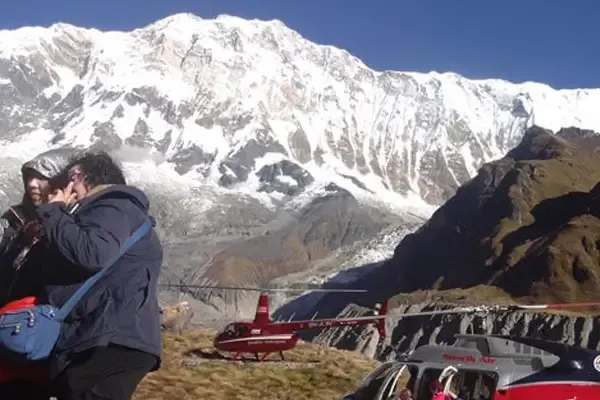
If it is not treated on time, it can progress to a severe form of altitude sickness, and that can involve emergency helicopter evacuation and hospital assistance.
Altitude sickness preventive measures:
- Drink plenty of water daily. By staying hydrated, you can reduce the risk of altitude sickness.
- Ascend slowly. Gaining elevation too quickly increases altitude sickness risk. Maintain your pace and enjoy the journey.
- We take short breaks at strategic points to catch our breath. Follow our guide's advice.
- Do not drink alcohol or smoke while ascending.
- Have carbohydrate-rich food for breakfast and lunch.
- Get ample sleep. Pack an eye mask and noise-cancelling earbuds.
- If you feel sick or uncomfortable, inform your guide.
Annapurna Base Camp trek accommodation
The Annapurna Base Camp trek route has a well-established network of lodges. Budget-friendly lodges are available throughout the way. Rooms are simple, twin-shared, but allow you to have a good night's sleep after a long day of walking.
Single rooms cost a few extra bucks and may not be available during peak trekking seasons. Likewise, bathrooms are mostly common and shared among trekkers.
In some lodges at lower elevations, private bathrooms may be available. We will try our best to get you a room with a private bathroom, but it is not guaranteed.
Accommodation in different villages:
- Between Nayapul and Ghorepani, the lodges are of the best quality. You will find rooms with en-suite bathrooms. Hot showers, charging, and WiFi come at a very low cost.
- Between Tadapani and Chhomrong, the lodges are good. Shared and single rooms are available. Private bathrooms are limited to some lodges only. Hot showers, charging, and WiFi are available.
- Between Bamboo and Deurali, the lodges are basic but functional. You will get a cozy bed. Rooms have minimal soundproofing, and toilets are mostly common. Charging is available. The network is not reliable.
- Above Deurali, the accommodation and services are very basic. Small, shared rooms with thin mattresses and blankets. Bathrooms are shared among trekkers. Squat toilets are common. No shower at ABC. Charging is available. No network.
Tips:
Below, we have shared tips that come from our personal experiences during the Annapurna Base Camp trek:
- Above 3,500 meters, cold weather makes sleeping troublesome. So, a high-quality sleeping bag is not optional but a necessity.
- The walls are not that thick. During peak seasons, lodges can get quite noisy. So, carry earplugs to sleep well.
- If you have a headache, sleep slightly elevated. You can put a folded jacket under the pillow.
- A sleeping bag is a must.
- Separate your hiking and sleeping socks, beanies, gloves, and base clothes. You will feel fresh and light. It will help you fall asleep easily.
- A hot water bottle will provide you with extra warmth. Hug it while sleeping.
Hygiene during the trek:
- Use baby wipes or wet tissues to wipe your body on days you cannot take a shower and before bed. It will genuinely refresh you.
- Dry shampoo will be quite handy. You can also oil your hair.
- Use hand sanitizers before every meal and after using the washrooms.
- Change your base layer regularly. Pack extra pairs of undies, t-shirts, pants, and socks.
- Pack a teahouse slipper. It will give you a break from the trekking boots.
- Pack a small microfiber towel. You will not get towels in lodges.
Food and drinking water during the ABC trek
The food options on the Annapurna Base Camp trek are good. We provide breakfast, lunch, and dinner each day, and you can buy more snacks and drinks on your menu.
The menu is almost similar in all villages, and food options decrease the higher you ascend. One of the staple meals is dal bhat. You might have heard about it.
It is a delicious combination of steamed rice, lentil soup, veggies, chicken curry (if available), pickles, and papad.
Similarly, you will have options like fried rice, paratha, thukpa, chowmine, momo, curries, pasta, Tibetan bread, pancake, soups, porridge, oats, muesli, bread, eggs, etc.
For beverages, different types of tea and coffee are available in all lodges along with hot chocolate, packaged juice, energy drinks, etc.
- Drinking water: Drinking water is available throughout the ABC trail. We drink boiled water found in lodges. It costs less and is also good for the environment. Note that before drinking water directly from the tap or a stream, treat it with water purification tablets (just to avoid any chance of indigestion).
Food tips:
- Do not miss your meals just because you are not feeling hungry. You have to eat to keep yourself energized for long walks.
- We highly recommend carbs for breakfast and lunch. It will provide you with ample energy to walk for long hours.
- Have dinner early. It will help you digest it soon and not interrupt your sleep.
- If you have any allergies, be attentive to the food you eat and also inform your guide.
- Garlic soup and ginger-honey tea are great for acclimatization and also boost your immunity.
- Pack ample snacks for the journey.
- Electrolytes and protein bars are great for quick midday energy while trekking.
Do not drink alcohol while ascending to Annapurna Base Camp. Alcohol dehydrates, suppresses breathing, disrupts sleep quality, and leads to altitude sickness symptoms. And walking with a hangover is not safe.
Food and drinks cautions:
- Above Chhomrong village, we strongly suggest that you do not consume frozen meat. The refrigeration system is not reliable at higher altitudes. So, you never know the meat's condition. It is best to avoid indigestion and stomach problems.
- High-fat foods can become tough to digest at high altitude.
- If you have any food allergies, inform us and your guide ahead of time. Also, be aware of what you are eating and drinking.
- Avoid very spicy food too. It can cause digestive distress.
Travel between Kathmandu and Pokhara
The Annapurna Base Camp trek begins from Pokhara. You will travel from Kathmandu to Pokhara and Pokhara to Kathmandu in a tourist bus. It is a comfortable and budget-friendly option.
Tourist buses between Kathmandu and Pokhara are luxurious, so the ride will be very comfortable. The drive will be around 6 hours long. The road is more than 90%.
If you want to reduce the travel time, upgrade to a short domestic flight.
For a luxurious experience, you can go for a helicopter flight from Kathmandu to Pokhara.
Annapurna Base Camp trek starting and ending points
You will start the Annapurna Base Camp trek from Nayapul and end it in Jhinu Danda.
Pokhara to Nayapul:
- Distance: 41 km/25 miles
- Drive duration: 1.5/2 hours
- Pokhara elevation: 820 m/2,690 ft
- Nayapul elevation: 1,070 m/3,510 ft
- Vehicle: Shared jeep
Jhinu Danda to Pokhara:
- Distance: 62 km/38.5 miles
- Drive duration: 3-4 hours
- Jhinu Danda elevation: 1,780 m/6,393 ft
- Pokhara elevation: 820 m/2,690 ft
- Vehicle: Shared jeep
If you have a budget, upgrade to a private jeep for more comfort and flexibility.
How do you stay connected on the Annapurna Base Camp trek route?
Communication during the Annapurna Base Camp trek is not that good. Once you enter deep into the valleys and forests, there is no network.
Mobile networks are good in Pokhara, Jhinu Danda, and Chhomrong village. Likewise, in Bamboo, Dovan, and Deurali villages, the network is patchy. At NBC and ABC, there is almost no network.
WiFi is available in many villages, but the network is not reliable. You have to prepare your mind not to use the internet during the trek.
For emergency communication, our guide will be equipped with a satellite phone.
Travel insurance for the Annapurna Base Camp trek
Travel insurance is a must for the Annapurna Base Camp trek. It should cover emergency helicopter evacuation/rescue, medical bills, trip cancellation, and loss of personal property.
Get suitable travel insurance in your country and bring the documents with you. We need a copy of your insurance before the trek starts. We use it to provide you with prompt assistance if needed.
Do not keep the travel insurance on hold to buy in Nepal. There is no good option.
While trekking in remote regions like Annapurna Base Camp, you need travel insurance for safety backup. It will not only save you from a huge financial burden but also allow you to receive help immediately.
Travel insurance is a great financial backup during an emergency!
Luggage weight limit
Our luggage weight limit for the Annapurna Base Camp trek is 9 kg for a duffel bag and 5 kg for a daypack per trekker. One porter carries a duffel bag for two trekkers, so he will carry 18 kg altogether plus his own things.
If you are left with any extra suitcases or things that are not required during the trek, you can store them in our office for free. Likewise, you can also store your additional luggage in your hotel's locker room for the trek duration.
Tips for the guide and porter
Tips for guides, porters, and drivers are not included in our Annapurna Base Camp trek package. You are expected to tip your guide and porter at the end of the trek. It is common practice in Nepal and highly appreciated.
Usually, it is recommended to tip 20% to 25% of the package cost or more if you want. In this case, the guide keeps a bigger share than the porter.
Alternatively, you can tip on a per-day basis to the guide and porter. USD 8 to 12 for the porter and USD 15 to USD 20 for the guide is common. Again, you can increase the amount if you are happy with their service.
Tips are usually given on the last day of the trek. The porter will travel with you to Jhinu Danda, so it is best if you prepare their tip in advance.
How to obtain a Nepal travel visa for the Annapurna Base Camp trek?
Nepal travel visa is not included in our Annapurna Base Camp trek package. Trekkers must obtain it themselves. They can obtain a tourist visa upon arrival at Tribhuvan International Airport or from the Nepalese Embassy or Consulate Office in their country.
On-arrival travel visa:
The on-arrival travel visa is available at all international airports and land entry borders in Nepal. However, it is not available to travelers from some countries. So, we recommend checking the official site of the Nepal government for updates on on-arrival visa rules.
For a quick visa process at Kathmandu Airport, we recommend applying for an on-arrival visa at least 15 days before you arrive in Nepal.
If you do not get a chance to apply online, you can complete the form upon arriving at Kathmandu Airport.
Nepal tourist visa fees
- 15 days: USD 30
- 30 days: USD 50
- 90 days: USD 25
Our Annapurna Base Camp trek package does not include travel visa fees.
Documents required for a tourist visa:
- Completed visa form
- Valid passport (minimum 6 months validity)
- Passport-size photo (rarely required now—often taken digitally)
- Visa fee (cash/card)
Health and safety guidelines for the Annapurna Base Camp trek
Trekking in the Himalayas is a very rewarding experience, but it also comes with the risk of altitude sickness, remote location, weather fluctuation, injury, etc.
So, trekkers have to be aware of these underlying risks and prepare accordingly. We assure a safe Annapurna Base Camp trek, but there are also a few things that are beyond our control, such as natural disasters, altitude sickness, etc.
The good news is that we have experienced all types of emergencies during the Annapurna Base Camp trek. Our guides are trained to handle emergencies and provide the best care. So, you are in safe hands.
Safety tips for the Annapurna Base Camp trek:
- Follow the altitude sickness prevention measures that we have shared above.
- Build your stamina, endurance, and strength before starting the trek.
- Do not underestimate the challenges, and follow the tips that we have shared across this page.
- While passing by mules or yaks during the trek, wait on the hillside and let them go first. Do not pet them or disturb them.
- Always follow your guide's instructions. Do not wander off the main trail.
- Dress in layers. Add or remove layers as needed. You will literally feel cold one second and hot another during trekking.
- Get your trekking boots early and break them in. Brand new shoes will give you blisters.
- Use trekking poles to safely navigate the terrain and reduce pressure on your knees.
- Buy a backpack with a good waist support band. It will reduce pressure on your shoulders.
- Get a water bladder. Trust us, drinking water becomes much easier while trekking with a water bladder.
ATM and money exchange
There is no ATM on the Annapurna Base Camp trek route. So, you have to withdraw money to use during the trek in Kathmandu or Pokhara.
You will need some money for personal expenses such as charging, WiFi, hot showers, extra snacks/beverages, and souvenirs.
These personal expenses are not covered in our Annapurna Base Camp trek cost. So, you have to pay for them yourself. Budget NPR 1000 to NPR 1500 per day, or whatever amount you may find suitable for you for personal expenses.